mindfulness
A Few Lessons
We Can Take From Dogs
On Seizing The Day
A reflection on presence, rest, joy, and the quiet lessons dogs offer us every day…
Sometimes, the most meaningful lessons in presence and wellbeing come to us quietly… For some time now, clients and colleagues have been encouraging me to write a little about my dogs, and the recent Easter break gave me the space to finally pause and reflect on how much I have learned from them… 🐾
Living alongside dogs has a way of softening your pace. They draw your attention to the ordinary things we so often miss: the coolness of morning air, the comfort of routine, the joy of being greeted at the door, the simple pleasure of stepping outside and noticing what the day feels like. They remind us, without trying to, that life is not only something to manage or move through efficiently. It is also something to notice.
That, in many ways, is the heart of mindfulness. Mindfulness asks us to return to the present moment with attention, openness, and less judgment. It invites us to stop rushing past our lives and to be where we actually are. Even something as simple as walking with a dog can support that kind of awareness when we slow down enough to notice our breath, our surroundings, and the experience unfolding in front of us.
Of course, dogs are not perfect little philosophers wrapped in fur. They are individuals, each with their own temperament, sensitivities, history, and stress responses. It is important not to romanticize them or flatten them into a comforting myth. Even so, life with dogs can still teach us something real about presence, connection, and calm. Not because they are flawless, but because they often bring us back to what matters.
They remind us to notice more
Anyone who has ever walked with a dog knows that they do not rush mindlessly from one place to another. They pause. They sniff. They listen. They look around. What might feel insignificant to us is, to them, worth investigating.
There is something deeply grounding about that. Most of us move through the day half-distracted, mentally replaying the past or anticipating what comes next. Dogs gently interrupt that habit. They bring us back to the sensory world – to wind, sound, smell, movement, and light. Walking with a dog can become a mindfulness practice when we consciously focus on the body and the senses instead of getting lost in thought.

They show us that presence is often simpler than we think
We often imagine mindfulness as something formal or difficult, a practice that requires perfect stillness, silence, or a carefully protected hour in the day. But Jon Kabat-Zinn, often called the “father of modern mindfulness,” describes mindfulness as “paying attention on purpose, in the present moment, non-judgmentally.” Dogs seem to embody that instinctively. Presence can look like fully enjoying a walk, fully resting when tired, or fully greeting someone you love.
There is no performance in that. Just attention.
For humans, that is not always easy. We rest while feeling guilty. We listen while thinking about our reply. We move through beautiful moments while barely registering them. Dogs remind us that being present does not have to be dramatic. Sometimes it is simply giving one thing your full attention instead of dividing yourself between ten others.
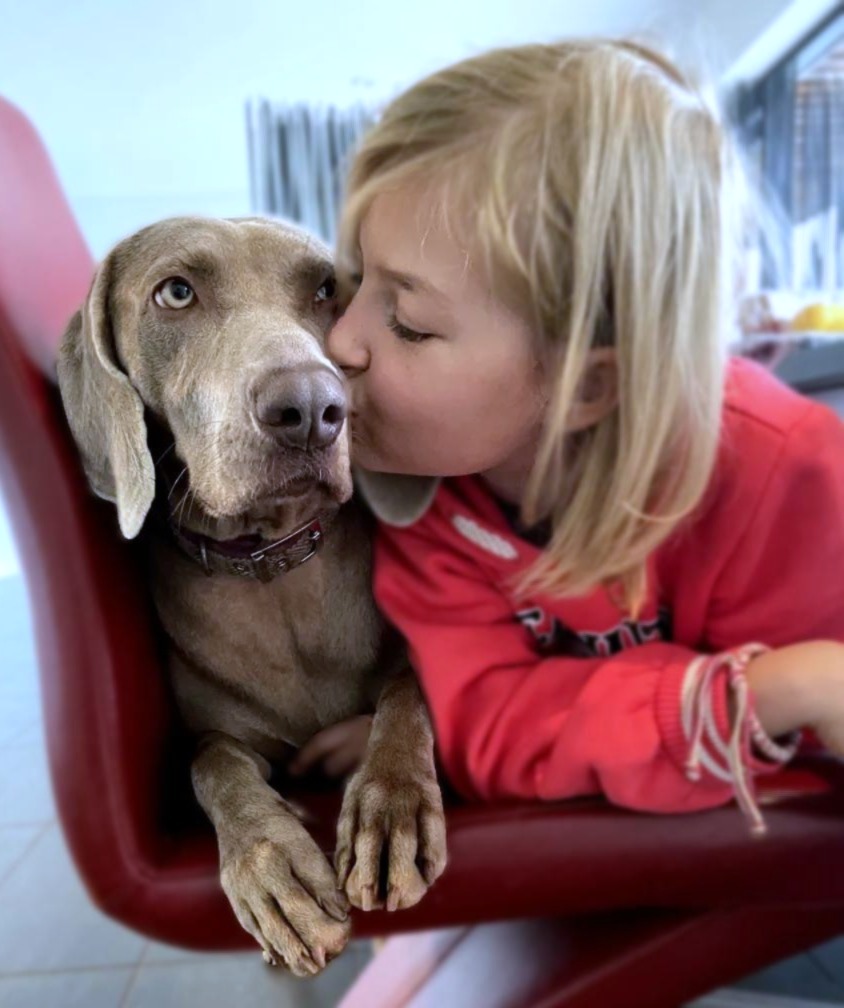
They teach us that attention is a form of care
Mindfulness is not only about what is happening inside us. It is also about how well we notice what is happening around us.
Dogs communicate constantly through body language. A soft gaze, a tucked tail, a yawn, lip-licking, looking away, or a shift in posture can all mean something. Learning to read those cues helps us respond with more care and understanding. Dogs rely heavily on non-verbal communication, and that paying attention to these signals can deepen trust and prevent misunderstanding.
There is a very human lesson in that too. So much of presence is simply learning to observe more gently. To notice tension in ourselves. To hear what someone is saying beneath their words. To become less reactive and more aware. Dogs remind us that careful attention is not passive. It is one of the clearest expressions of care we can offer.
They make rest look natural again
One of the quietest lessons dogs offer is their relationship with rest. They do not seem to view rest as something they have to earn. When they are tired, they settle. When they need space, they take it. When they feel safe, they let themselves relax.
Many of us have drifted far from that instinct. We have learned to override tiredness, minimize stress, and treat exhaustion as if it were proof that we are doing enough. But mindfulness calls us back to the wisdom of the body. It asks us to notice when we are stretched too thin, overstimulated, or no longer fully present.
The same awareness that helps us recognize stress signals in dogs can be a reminder to respect our own signals too. Rest is not laziness. Often, it is wisdom

Rest is not weakness. It is part of wellbeing.
They remind us that connection changes the quality of a moment
There is a real difference between simply being near someone and genuinely being with them. Dogs seem to understand that naturally. Their presence feels honest, immediate, and uncomplicated.
Spending mindful time with a dog can be genuinely good for our wellbeing. Many dog owners notice that they feel better when they are really engaged with their dog, not just sharing the same space. It is often those small moments of connection that matter most, when a dog comes over for contact, or when we slow down enough to really respond to them. It is not just about proximity. It is about attention, connection, and the quality of the relationship.
That feels especially meaningful at a time when many of us are constantly in touch, yet still longing for real connection. Dogs have a way of bringing us back to that. They draw us into the moment. They invite us to look up, respond, engage, and be present. In that sense, mindfulness is not only something personal. It is something we experience in relationship too.
They find joy in small things and engage fully
Mindfulness is sometimes spoken about in very serious terms, but presence also includes joy. Dogs seem to know this instinctively. They do not need much to experience delight. A walk along a familiar path. A favourite toy. A patch of sunlight on the floor. The sound of someone coming home. The simple comfort of being close.
Watching that kind of joy can feel unexpectedly moving. It is not because dogs never experience fear, stress, or discomfort, because they do. It is because they often remain open to the goodness that still exists within an ordinary day. Their enjoyment is immediate, wholehearted, and free of overthinking. That can be a powerful reminder for us.
So often, we rush through good moments without fully registering them, or we postpone joy until life feels calmer, easier, or more complete. Dogs remind us that some of life’s deepest comforts arrive much more quietly than that. A mindful life is rarely built from grand moments alone. More often, it is shaped by our ability to notice and receive the small ones.
A laugh.
A walk.
A familiar face.
A sense of ease.
A small moment of calm.
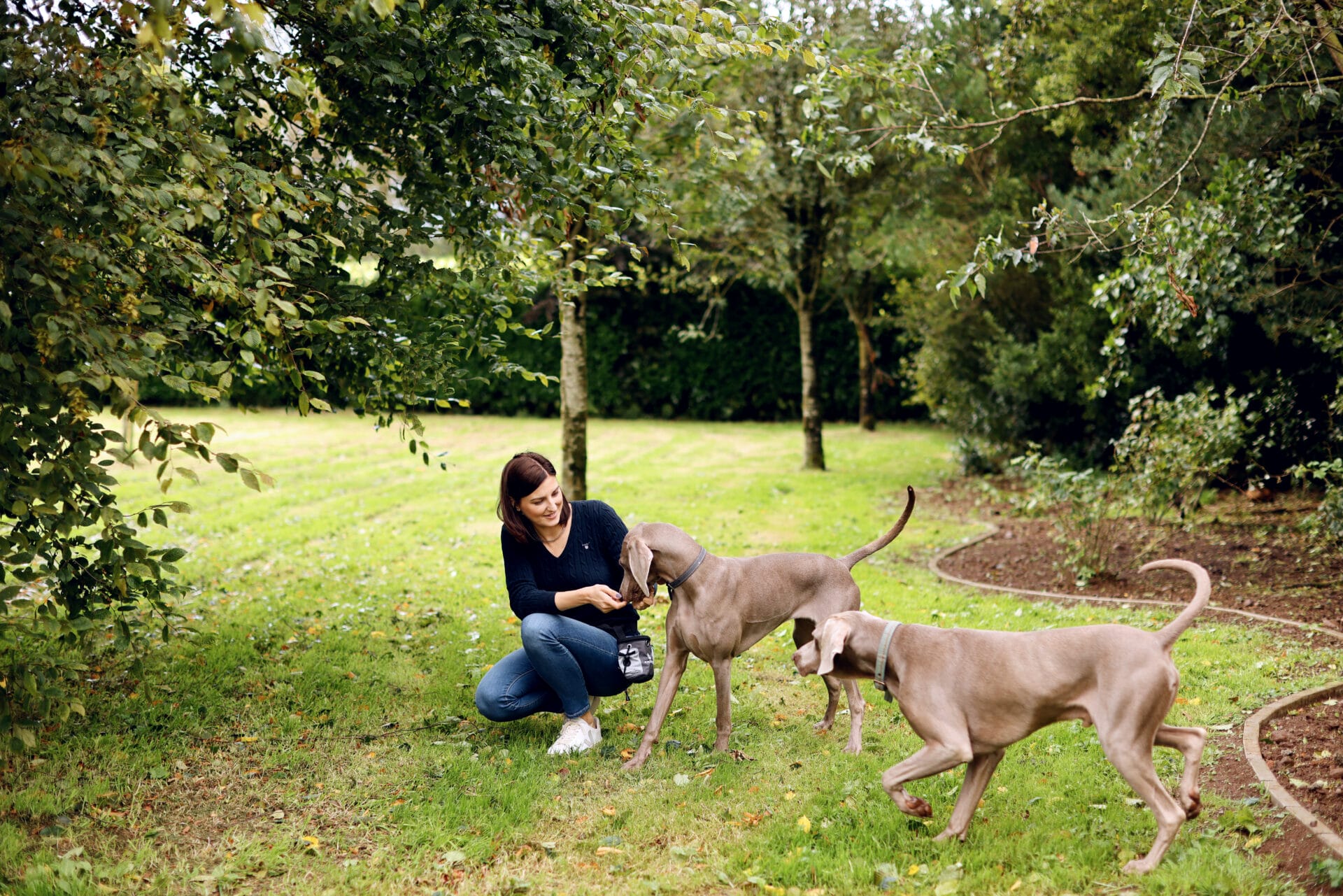
Connection, presence, and simple shared moments can teach us more than we realise…
A final thought
Maybe the reason dogs teach us so much about mindfulness is not that they have mastered life in some ideal way. It may be something much simpler than that. They interrupt our tendency to drift away from the moment.
They draw us out of our heads and back into the day. They get us outside. They bring us back to routine, touch, movement, companionship, and the sensory details of being alive. They remind us to pause before rushing on, to soften before reacting, and to notice before dismissing. In their own quiet way, they teach us to appreciate what is here while it is here.
And perhaps that is one of the most meaningful lessons we can take from dogs about mindfulness. Not to make life bigger, but to meet it more fully.